
Well-written Gherkin test cases are the foundation of successful BDD, but sloppy scenarios wreck team collaboration and break your automation suite. The gap between good and bad Gherkin isn’t syntax; it’s whether your scenarios describe what the system does instead of how it does it. Writing effective Gherkin test cases separates BDD implementations that ship… Continue reading Good vs Bad Gherkin Test Cases: Examples That Actually Work
Tag: Gherkin Scenario
Gherkin API Testing: Patterns and Examples

Gherkin API testing turns REST endpoints into plain-language Given-When-Then scenarios that work as both living documentation and automated checks. Start with one feature file for your busiest endpoint, then roll the patterns below across your whole API surface. APIs are where modern software actually breaks. The average application now leans on dozens of APIs to… Continue reading Gherkin API Testing: Patterns and Examples
Good Gherkin Examples vs Bad Scenarios (with Fixes)

The gap between good Gherkin examples and bad ones comes down to one thing: behavior over button-clicks. Treat each scenario as a contract for one behavior, and your feature files turn into living documentation instead of brittle scripts. Writing good Gherkin examples is about describing behavior so clearly that a developer, a tester, and a… Continue reading Good Gherkin Examples vs Bad Scenarios (with Fixes)
Gherkin Software Testing: Syntax, Best Practices, and Pitfalls

Gherkin software testing turns plain-English specifications into executable tests your whole team can read, but only when you stop treating it like a scripting language. If your feature files read like step-by-step UI scripts, you’re doing BDD testing backward. Here’s how to fix that. Behavior-driven development sounds simple on paper: write the behavior in plain… Continue reading Gherkin Software Testing: Syntax, Best Practices, and Pitfalls
Gherkin vs Traditional Testing: Which One Wins with AI?

Gherkin’s structured, human-readable format gives it a decisive edge when working with AI-powered testing tools. Start evaluating your test suite structure now, as AI-powered QA is becoming the industry standard, and your test format determines how well these tools can assist you. The debate over Gherkin vs traditional testing has taken an unexpected turn. What… Continue reading Gherkin vs Traditional Testing: Which One Wins with AI?
Scaling Gherkin Software Testing for Modern QA Teams

Introduction Adopting Behavior Driven Development (BDD) starts with enthusiasm. The first fifty scenarios are easy to write. They clarify requirements and align the team. But somewhere around scenario #500, the reality of Gherkin software testing sets in. Feature files become bloated. Scenarios start to conflict. The “simple” English syntax that was supposed to bridge the gap between… Continue reading Scaling Gherkin Software Testing for Modern QA Teams
Gherkin User Stories Acceptance Criteria: From Manual Specs to AI Agents

Introduction We have all sat in that “Three Amigos” meeting. The Product Owner reads a user story that sounds perfectly reasonable. The Developer nods, visualizing the database schema. You, the QA professional, are already picturing the edge cases where the whole thing explodes. Three weeks later, the feature lands in staging. It works exactly how… Continue reading Gherkin User Stories Acceptance Criteria: From Manual Specs to AI Agents
Best Practices for Writing Maintainable Gherkin Test Cases
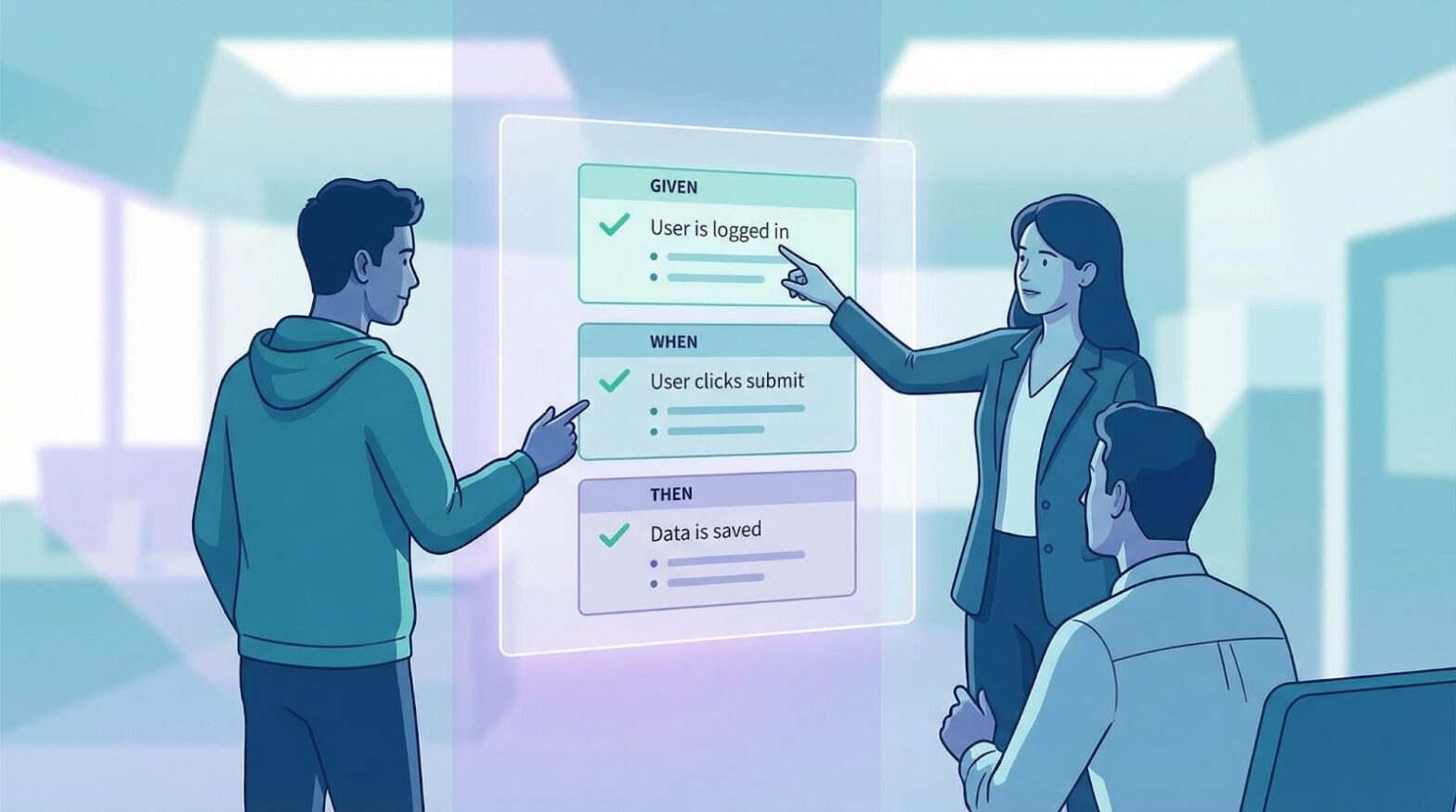
Key Takeaways Well-crafted gherkin test cases serve as living documentation that bridges technical teams and business stakeholders while remaining easy to update as requirements evolve. BDD testing has become a cornerstone of modern quality assurance, with over 60% of agile teams now using behavior-driven development to align software behaviors with user needs. Yet many teams… Continue reading Best Practices for Writing Maintainable Gherkin Test Cases
How to Write Effective Gherkin Acceptance Criteria: A Guide

Key Takeaways: Gherkin acceptance criteria transform user stories into executable specifications that bridge technical and business teams. Writing gherkin acceptance criteria has become essential for modern software development teams seeking to bridge the communication gap between business stakeholders and technical teams. The 2024 World Quality Report shows that over 60% of agile teams have adopted… Continue reading How to Write Effective Gherkin Acceptance Criteria: A Guide
What Is Gherkin? How to Write Gherkin Tests (2026 Guide)

Gherkin is a plain-English syntax that turns requirements into tests everyone on the team can read, write, and run. If your requirements still live in static docs, learning Gherkin is the fastest way to make them testable, traceable, and ready for AI-driven QA. When it comes to writing and testing software, teams have a lot… Continue reading What Is Gherkin? How to Write Gherkin Tests (2026 Guide)