
The right test management software connects your test plans, dev tools, and results into one system that actually keeps up with how you ship. If your tests still live in spreadsheets or a tool that can’t see your pipeline, you’re paying for it in coverage gaps and slow releases. Shortlist platforms that plug straight into… Continue reading Test Management Software: The Complete Buyer’s Guide for QA Teams
Category: Test Management Tool
TestQuality is a Test Management Tool for Software Testing QA Teams and Testers.
Best Test Case Management Tools for Agile Teams

Agile teams need test case management tools that move at sprint speed, not enterprise crawl. If your current tool feels like it’s slowing your sprints down, it’s time to upgrade. Agile QA relies on how fast you can plan, execute, and report on tests inside a two-week sprint. The tooling matters. According to the Capgemini… Continue reading Best Test Case Management Tools for Agile Teams
Best Practices for Implementing Test Automation in CI/CD

Effective test automation in CI/CD pipelines blends strategy, smart tooling, and AI-assisted workflows to ship faster without breaking quality. Pick a strategy that matches your delivery velocity, then layer in AI-assisted test generation as your automation maturity grows. Software teams are shipping more code than ever, and a lot of that code is now written… Continue reading Best Practices for Implementing Test Automation in CI/CD
What Features Should a QA Test Management System Have?

The right QA test management system features turn QA from a bottleneck into a release-accelerator. Evaluate platforms against your actual workflow, not a generic feature checklist. Free trials and freemium test plan builders make this easier than ever. Picking a QA test management system without knowing exactly which features matter is how teams end up… Continue reading What Features Should a QA Test Management System Have?
Zephyr and TestRail Alternatives for Modern Test Management

Key Takeaways TestRail and Zephyr dominate name recognition, but neither is the right fit for every QA team in 2026. If you’re evaluating your options, the right platform should fit your DevOps workflow out of the box, not the other way around. When QA teams start searching for alternatives to Zephyr and TestRail, it’s rarely… Continue reading Zephyr and TestRail Alternatives for Modern Test Management
Best Test Management Tools 2026: AI Features Compared
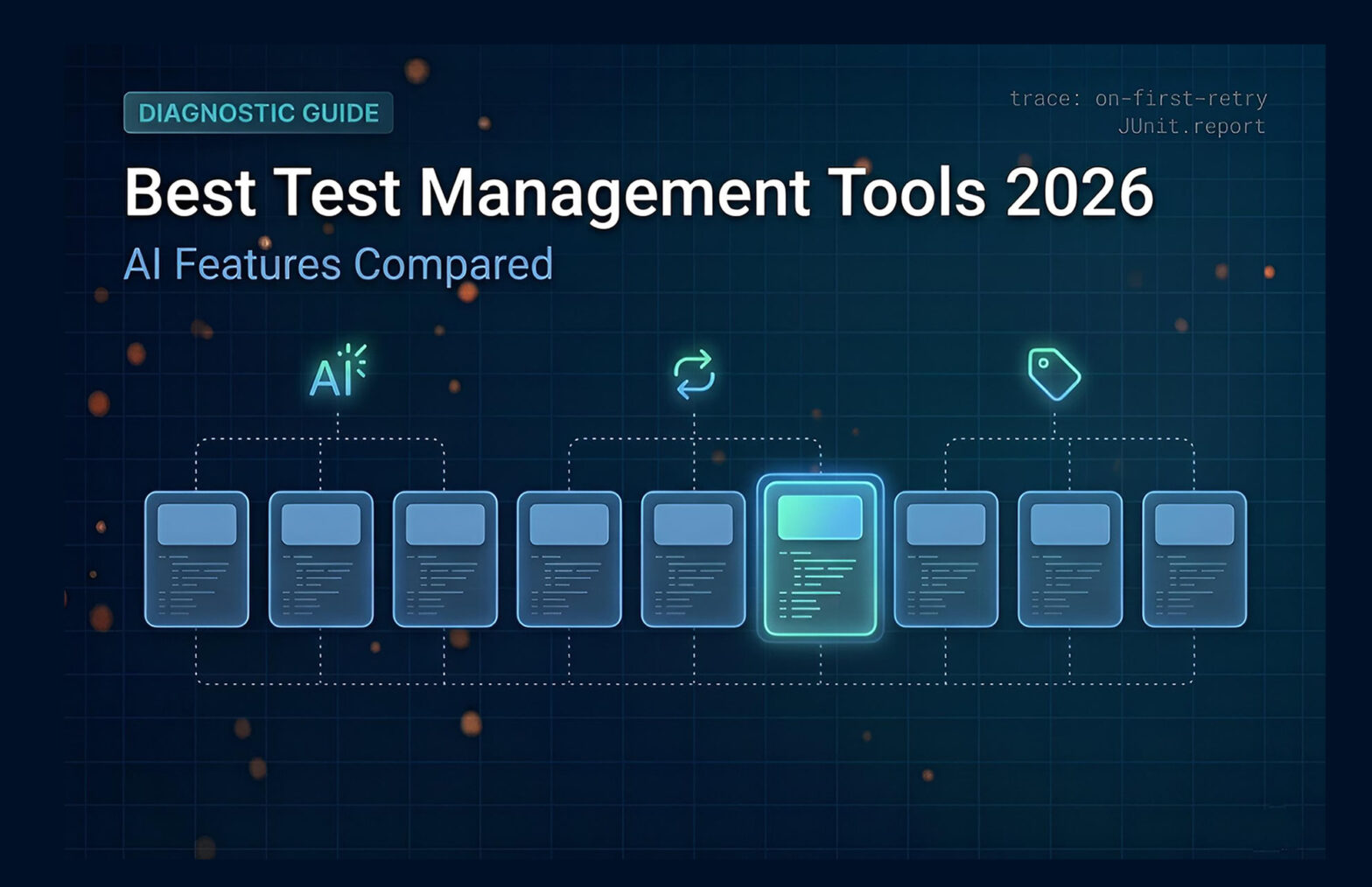
At a Glance 9 tools, 5 criteria, 1 buying decision Independent comparison for QA leads evaluating test management software in 2026. Pricing transparency is now a differentiator: only 7 of 9 leading tools disclose pricing publicly — Tricentis qTest and Jira Rovo gate costs behind sales conversations. Jira integration falls into 3 patterns: native marketplace… Continue reading Best Test Management Tools 2026: AI Features Compared
QA Test Management Software: 2026 Buyer’s Guide

Key Takeaways Choosing the right QA test management software is one of the highest-leverage decisions a QA team makes in 2026. If your team is still managing tests through spreadsheets or a tool that doesn’t connect to your dev stack, you’re leaving real coverage gaps and release time on the table. Picking QA test management… Continue reading QA Test Management Software: 2026 Buyer’s Guide
Selenium vs Playwright in 2026: A Methodology-Driven Comparison
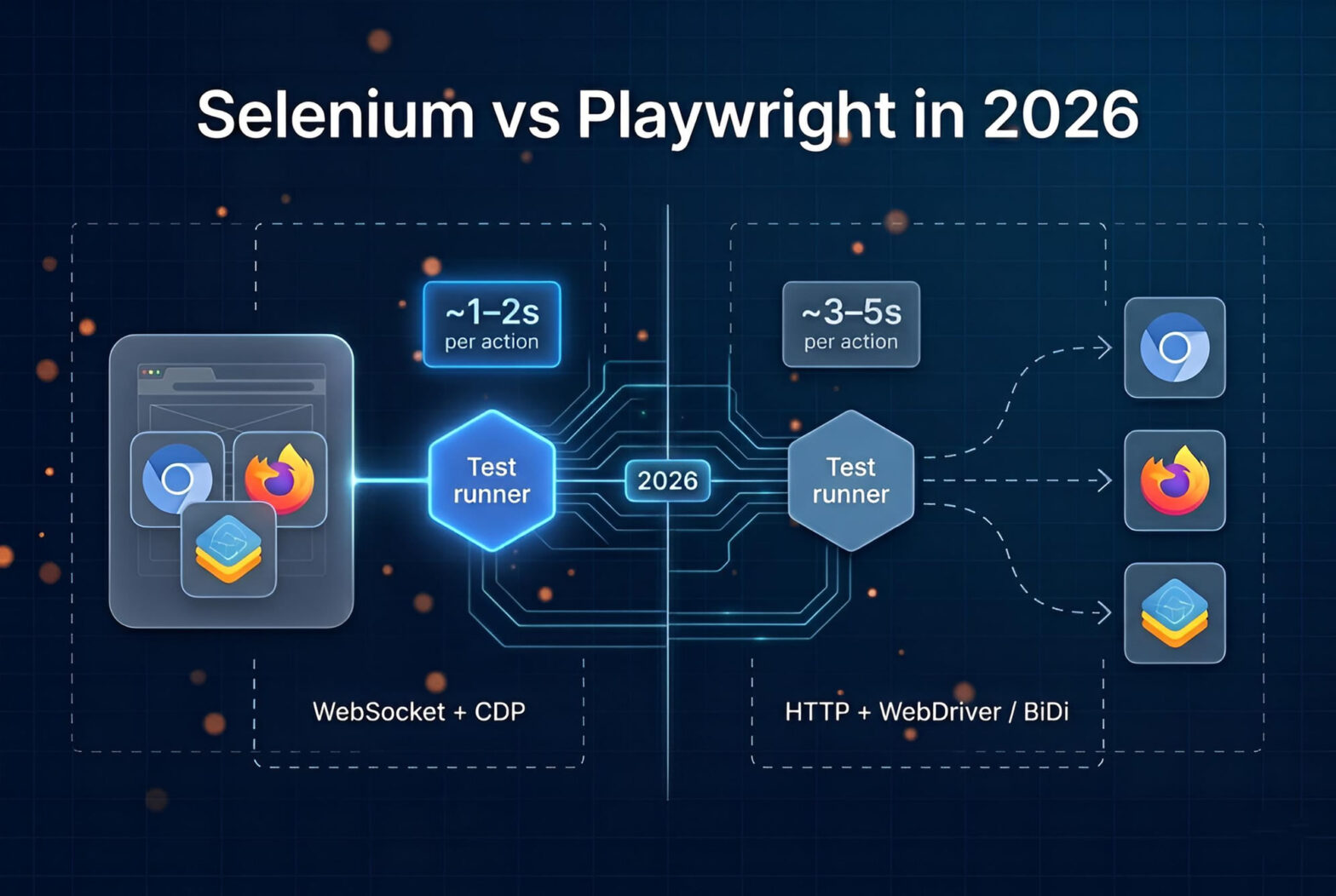
At a Glance Selenium vs Playwright in 2026, decided by architecture, not hype A methodology-driven comparison — benchmarks, BiDi, MCP, and migration math. Speed gap is real: Playwright executes actions in 1–2 seconds via WebSocket/CDP versus Selenium’s 3–5 seconds via HTTP/WebDriver, with parallel suite runs roughly 3x faster in published benchmarks. Adoption has flipped in… Continue reading Selenium vs Playwright in 2026: A Methodology-Driven Comparison
The Agentic SDLC: How to Build, Test and Verify AI-Generated Code Without Losing Control

At a Glance The State of AI-Generated Code in 2026 The verification gap is the defining engineering problem of the agentic era. 75.3% of multi-agent failures stem from the planner-coder gap — semantic breakdown during handoff from planning to coding agents. (arXiv 2510.10460, 2025) 75.17% of those failures are silent gray errors — code that… Continue reading The Agentic SDLC: How to Build, Test and Verify AI-Generated Code Without Losing Control
Agentic Exploratory Testing: Validating the Unexpected

Autonomous exploratory testing is an unscripted software validation approach in which AI agents dynamically interact with an application using reasoning rather than predefined scripts. Instead of following documented paths, these systems leverage heuristic-based exploration and context-awareness to navigate complex interfaces, map undocumented application states, and surface the “unknown unknowns” that structured testing consistently misses. Unlike… Continue reading Agentic Exploratory Testing: Validating the Unexpected