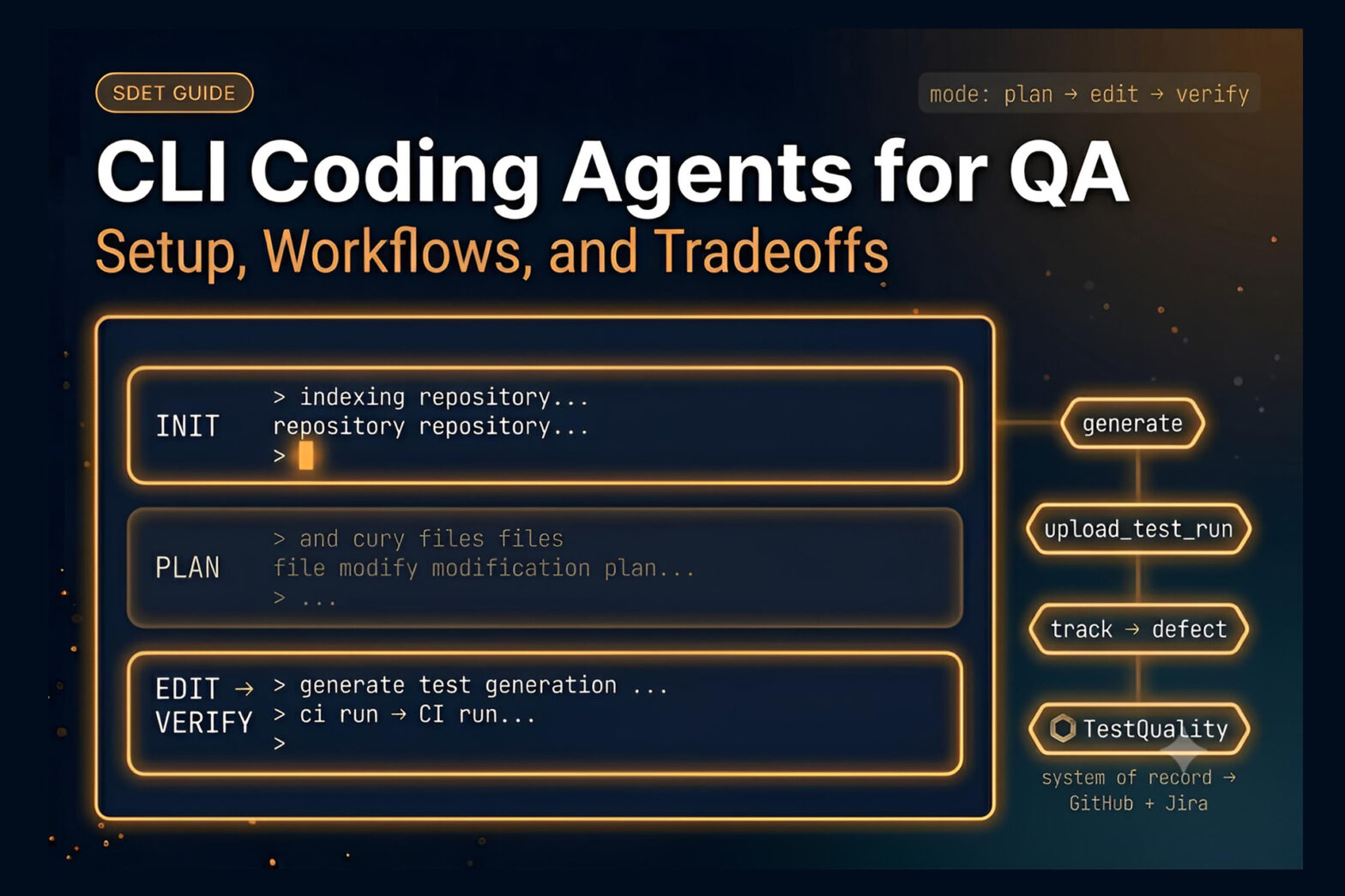
At a Glance CLI Coding Agents for QA: What You Actually Get Terminal-resident, repo-aware, and capable of running your entire test loop autonomously. Scope advantage: CLI agents operate across your entire repository — not just open files — letting you assign multi-file refactors, coverage gap analysis, and bulk selector updates without leaving the terminal. Verification… Continue reading CLI Coding Agents for QA Engineers: Setup, Workflows, and Tradeoffs
Tag: Agentic SDLC
Human in the Loop Testing: Where AI Ends and QA Judgment Begins
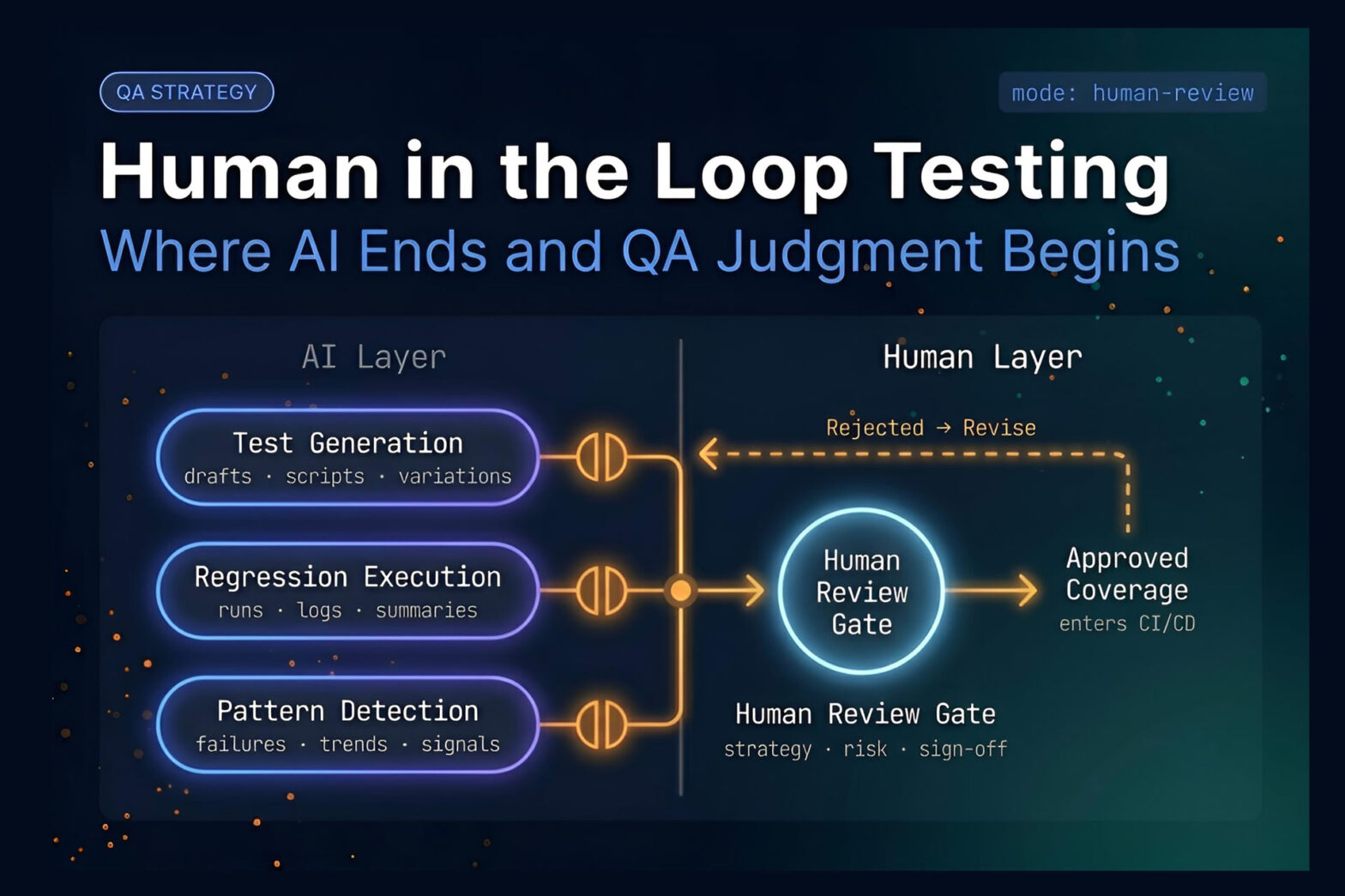
At a Glance Human in the Loop Testing: Where AI Ends and QA Judgment Begins The question isn’t whether to use AI in QA. It’s knowing exactly where to keep a human in control. The core risk: Over 75% of multi-agent failures are silent semantic errors that pass automated checks but violate business logic —… Continue reading Human in the Loop Testing: Where AI Ends and QA Judgment Begins
How To Integrate Agentic Testing Into Your CI/CD Pipeline
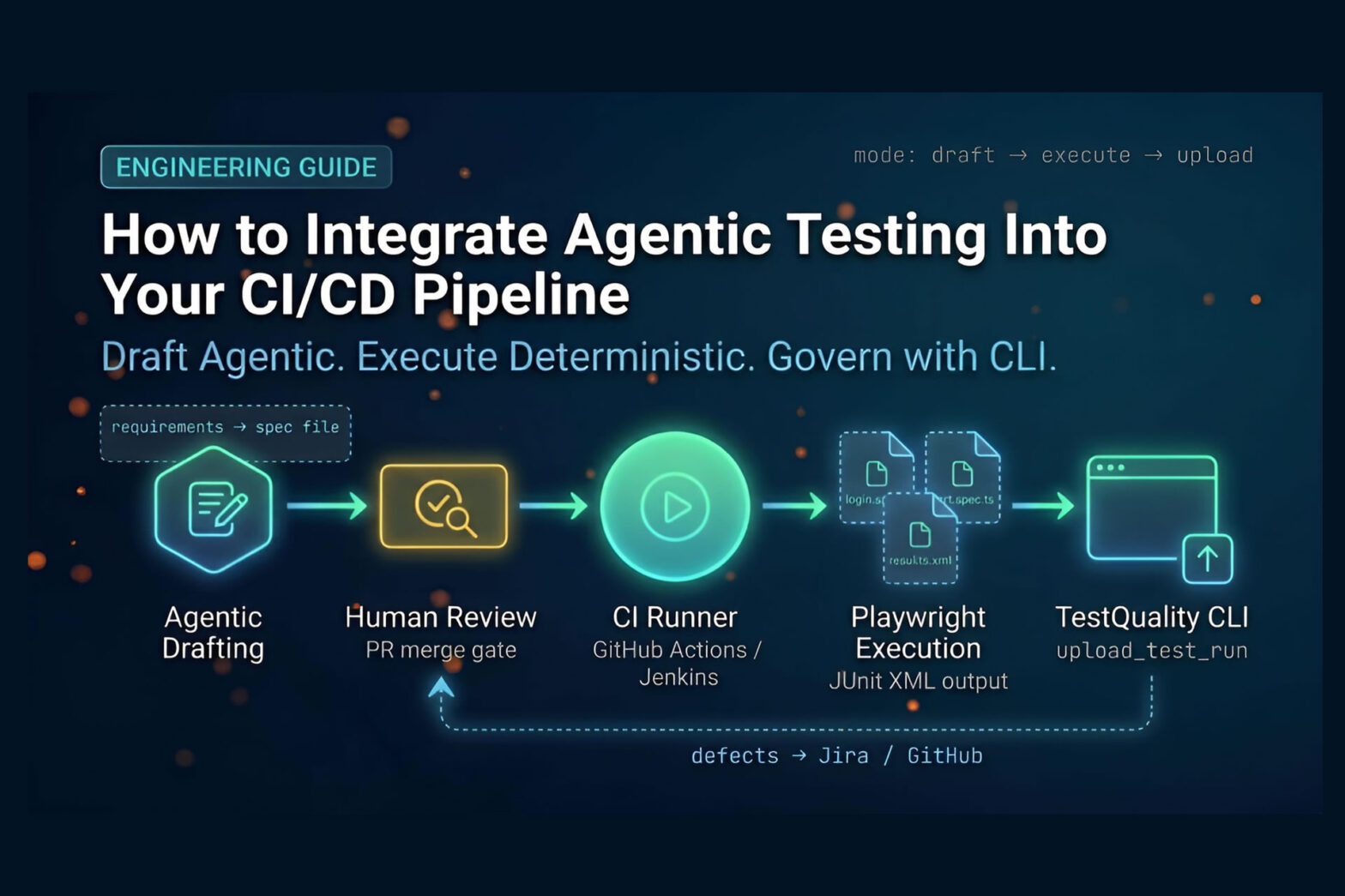
At a Glance Agentic Testing in CI/CD: Where the Boundary Is and How to Cross It Cleanly AI drafts the tests. Playwright runs them. The CLI governs both. The boundary is strict: Agentic tools belong in the drafting layer — analysis, coverage planning, and script generation. Deterministic frameworks like Playwright or Selenium own execution. Mixing… Continue reading How To Integrate Agentic Testing Into Your CI/CD Pipeline
Agentic Testing and QA: An AI Framework for Chatbots & RAG
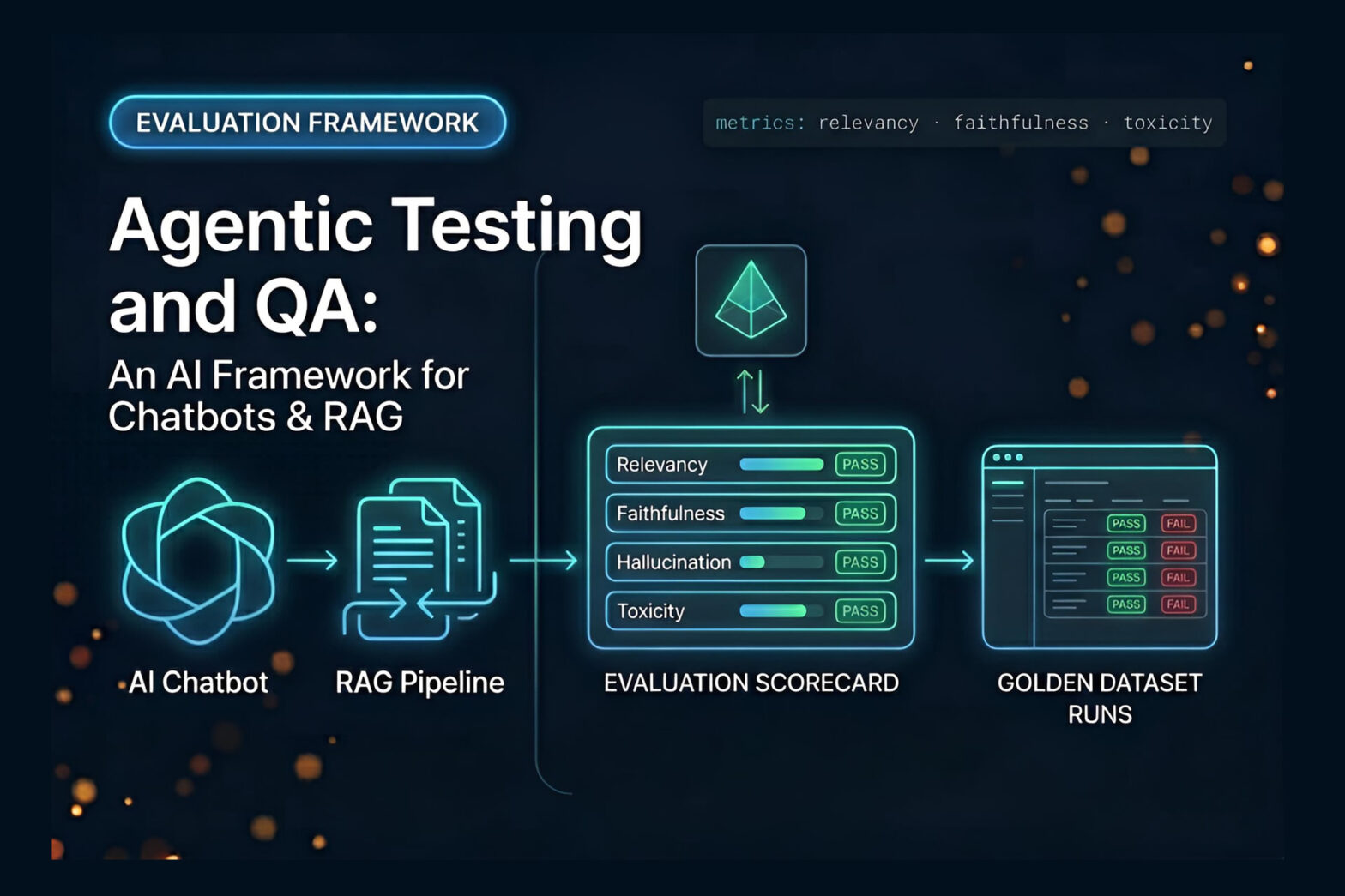
At a Glance Why Traditional Automation Fails AI Systems — and What to Do Instead Pass/fail is not enough when your system can hallucinate, drift, or refuse incorrectly. The core shift: AI systems require evaluation across multiple quality dimensions — relevance, faithfulness, hallucination risk, toxicity, and retrieval grounding — not a single pass/fail assertion. Golden… Continue reading Agentic Testing and QA: An AI Framework for Chatbots & RAG
How to Test AI Agents: A Step-by-Step Evaluation Guide
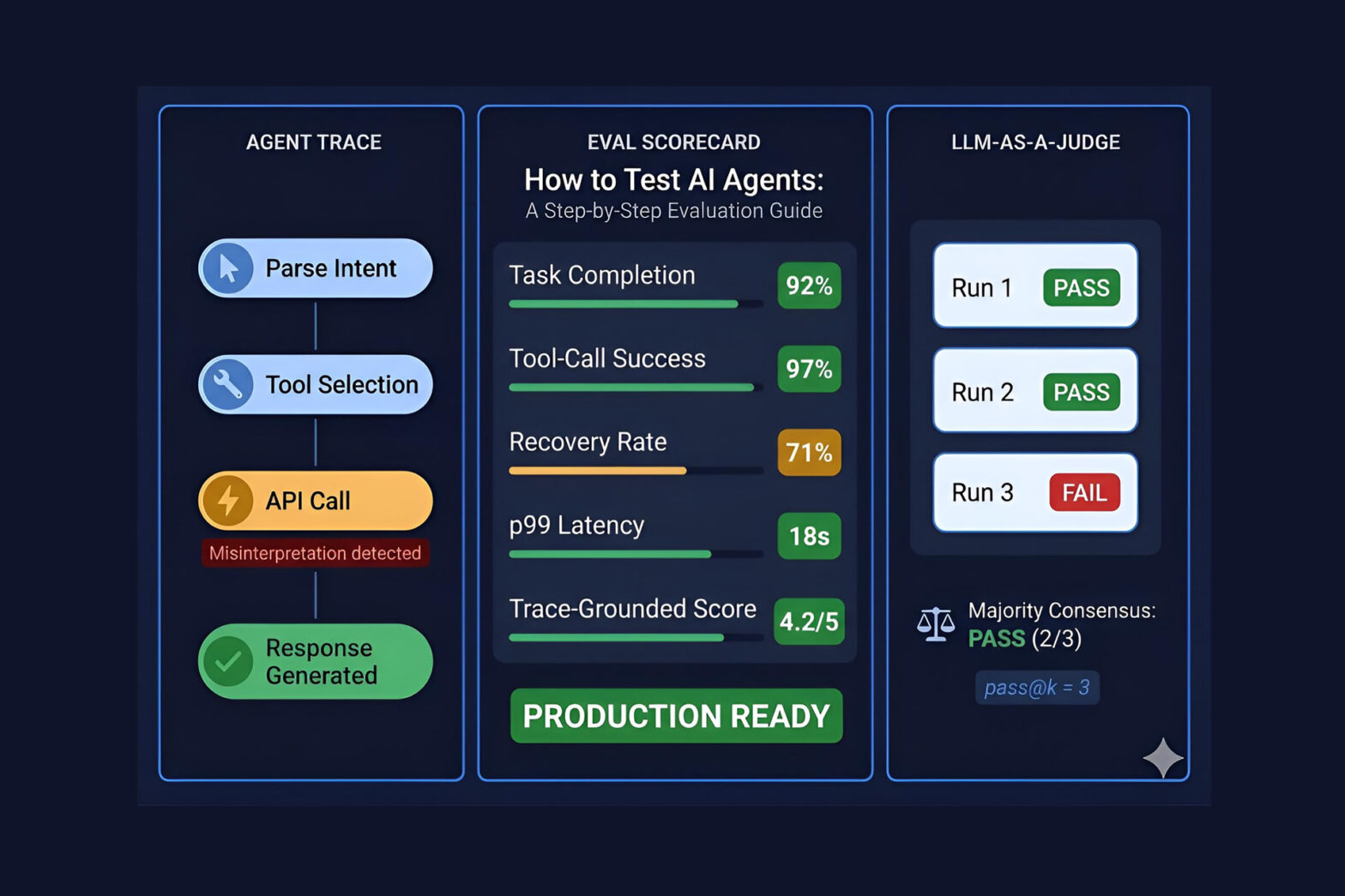
At a Glance How to Test AI Agents: What Every QA Team Needs to Know A correct final answer does not mean a correct agent — trajectory matters as much as outcome. Dual-layer evaluation: Testing AI agents requires validating both the orchestration layer (tool selection, argument construction) and the reasoning layer (context interpretation, decision quality)… Continue reading How to Test AI Agents: A Step-by-Step Evaluation Guide
Continuous Testing Pipeline: Test Management for CI/CD
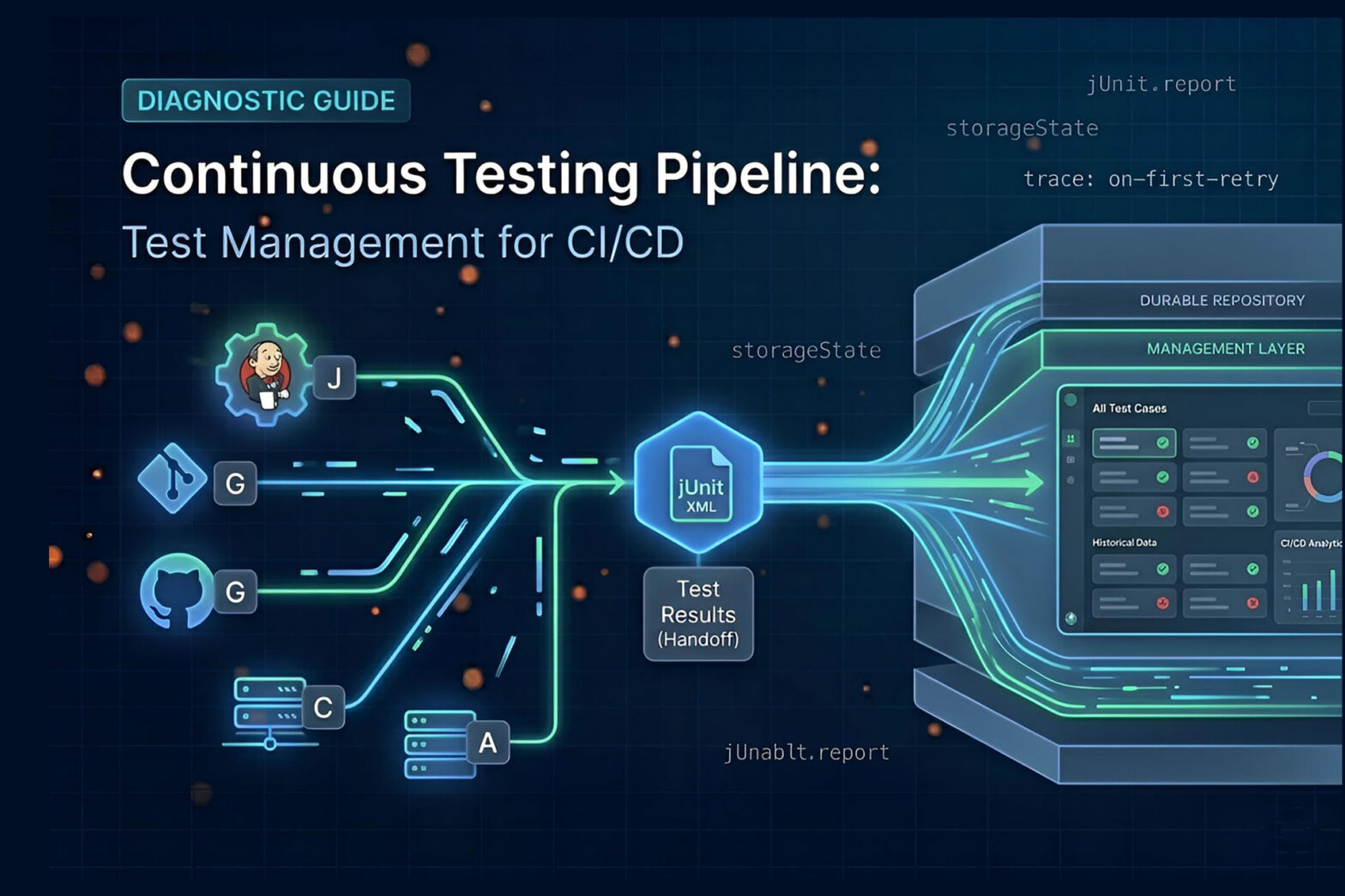
Key Takeaways Pipelines are ephemeral. Your test management layer shouldn’t be. A vendor-agnostic continuous testing pipeline is the only way to keep test history intact across CI/CD migrations. The delivery gap is widening: AI throughput is up 59% YoY, feature-branch activity is up 50%, but main-branch success has dropped to a five-year low of 70.8%.… Continue reading Continuous Testing Pipeline: Test Management for CI/CD
Playwright Flaky Tests: The 2026 Fix Playbook
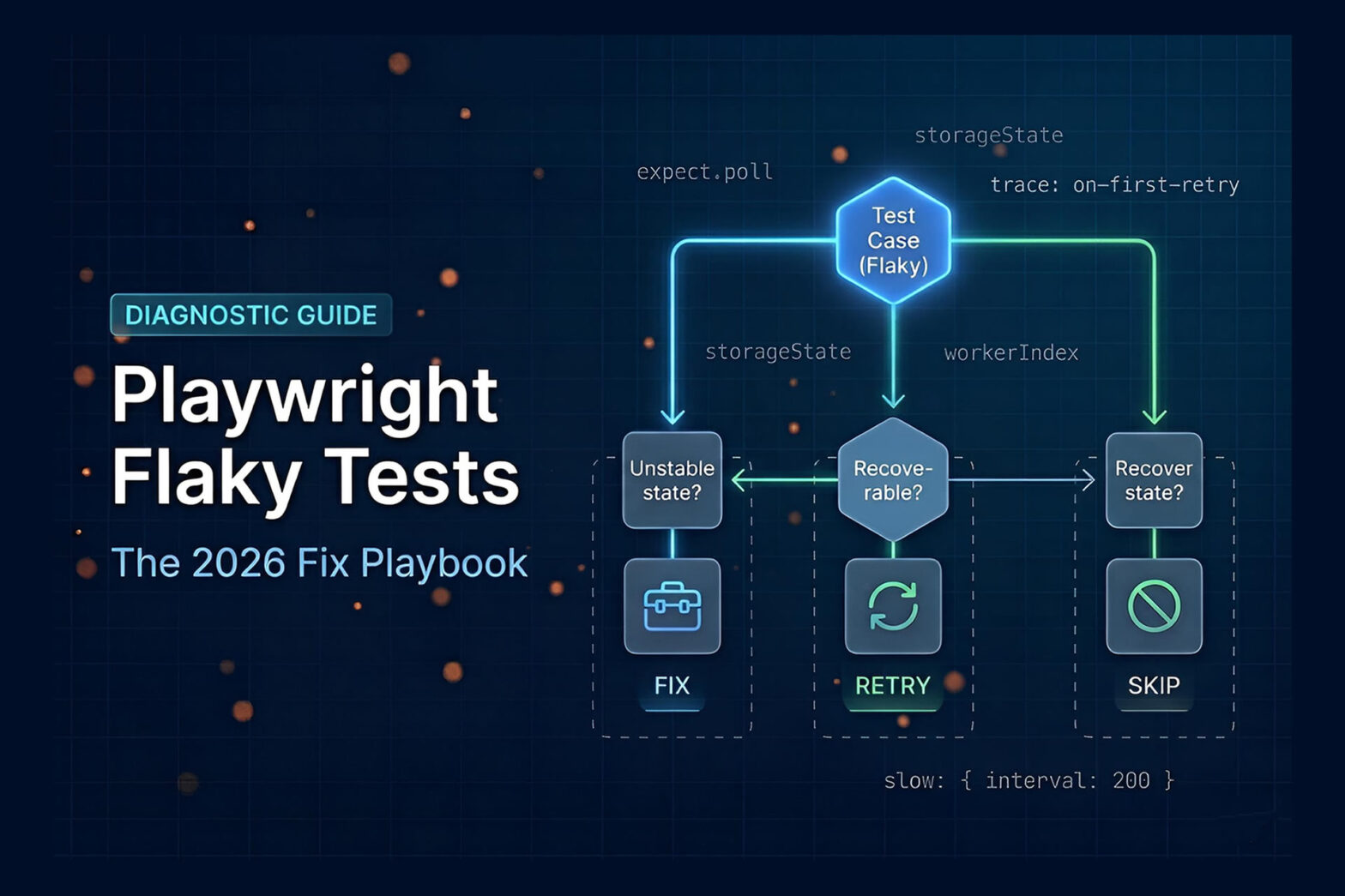
At a Glance Five diagnostic patterns. One decision tree. A senior practitioner’s triage playbook for Playwright flakiness in 2026. Flakiness is architectural, not framework-borne: Almost every flake traces back to async state, locator drift, session pollution, environment variance, or AI-agent non-determinism — not to Playwright itself. The fix is bigger than the diagnosis: Replace static… Continue reading Playwright Flaky Tests: The 2026 Fix Playbook
Beyond RAG: How Agentic Memory Solves Context Rot in AI Agents

Key Takeaways Agentic Memory: The Persistence Layer Beyond RAG Stop rebuilding context every session. Start writing it once and remembering it forever. Silent Semantic Errors Dominate Multi-Agent Failures: Eliminate the silent semantic drift behind 75.17% of multi-agent failures by anchoring agents to persistent state. A-MEM Doubles Multi-Hop Reasoning Performance:Research from Xu et al. at NeurIPS… Continue reading Beyond RAG: How Agentic Memory Solves Context Rot in AI Agents
Context Engineering: Build Reliable AI Agents Without Vibe Coding

Key Takeaways The Discipline That Separates Reliable AI Agents From Technical Debt Factories Programmatic boundaries. Builder-validator chains. Verified outputs. Context engineering replaces vibe coding by enforcing programmatic boundaries, modular task decomposition, and strict builder-validator chains that eliminate AI technical debt at the source. Silent semantic errors drive 75.17% of multi-agent failures, requiring continuous verification loops… Continue reading Context Engineering: Build Reliable AI Agents Without Vibe Coding
The Agentic SDLC: How to Build, Test and Verify AI-Generated Code Without Losing Control

At a Glance The State of AI-Generated Code in 2026 The verification gap is the defining engineering problem of the agentic era. 75.3% of multi-agent failures stem from the planner-coder gap — semantic breakdown during handoff from planning to coding agents. (arXiv 2510.10460, 2025) 75.17% of those failures are silent gray errors — code that… Continue reading The Agentic SDLC: How to Build, Test and Verify AI-Generated Code Without Losing Control