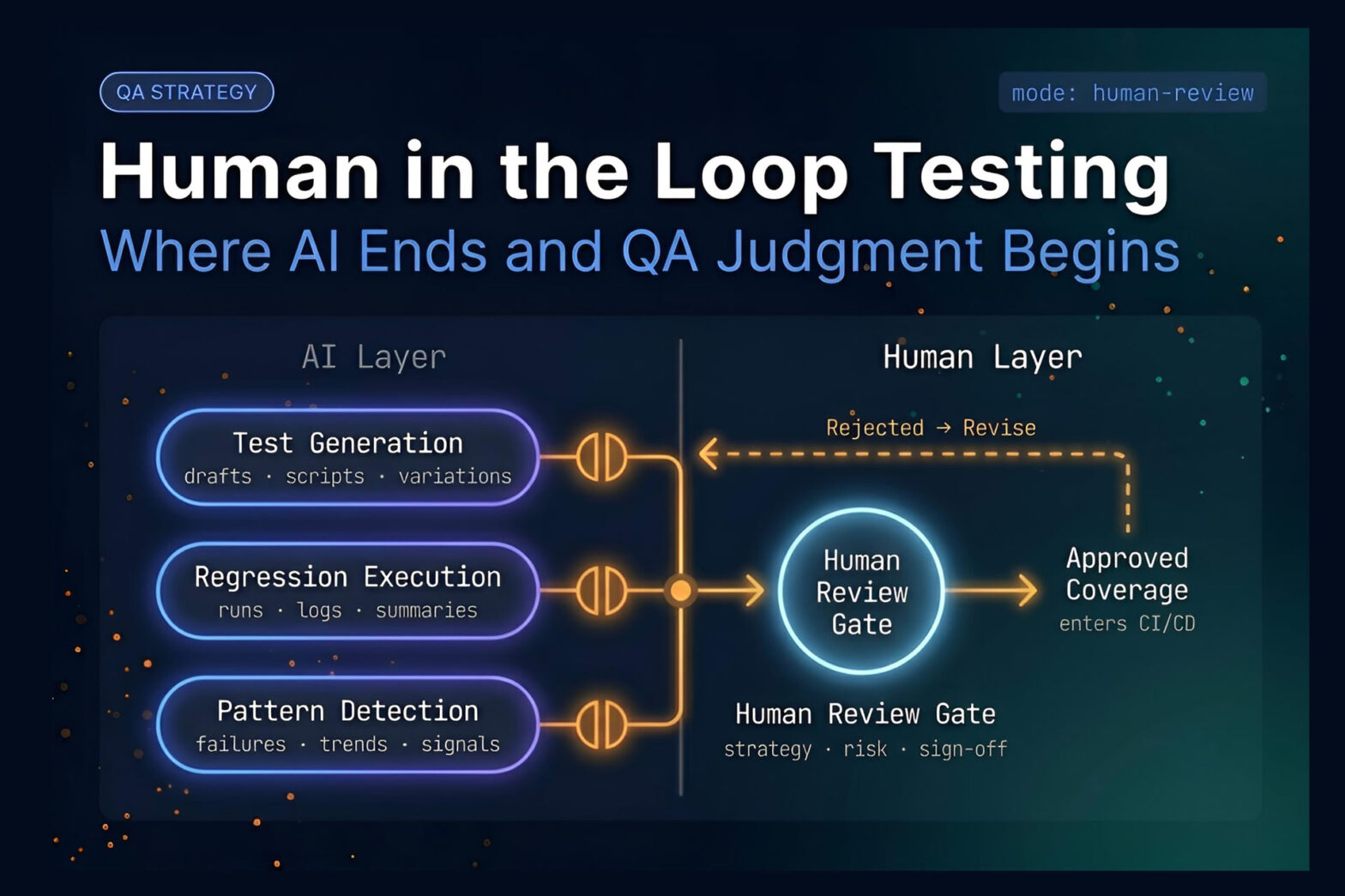
At a Glance Human in the Loop Testing: Where AI Ends and QA Judgment Begins The question isn’t whether to use AI in QA. It’s knowing exactly where to keep a human in control. The core risk: Over 75% of multi-agent failures are silent semantic errors that pass automated checks but violate business logic —… Continue reading Human in the Loop Testing: Where AI Ends and QA Judgment Begins
Tag: Exploratory Testing
How to Stop Bugs from Slowing Down Software Releases
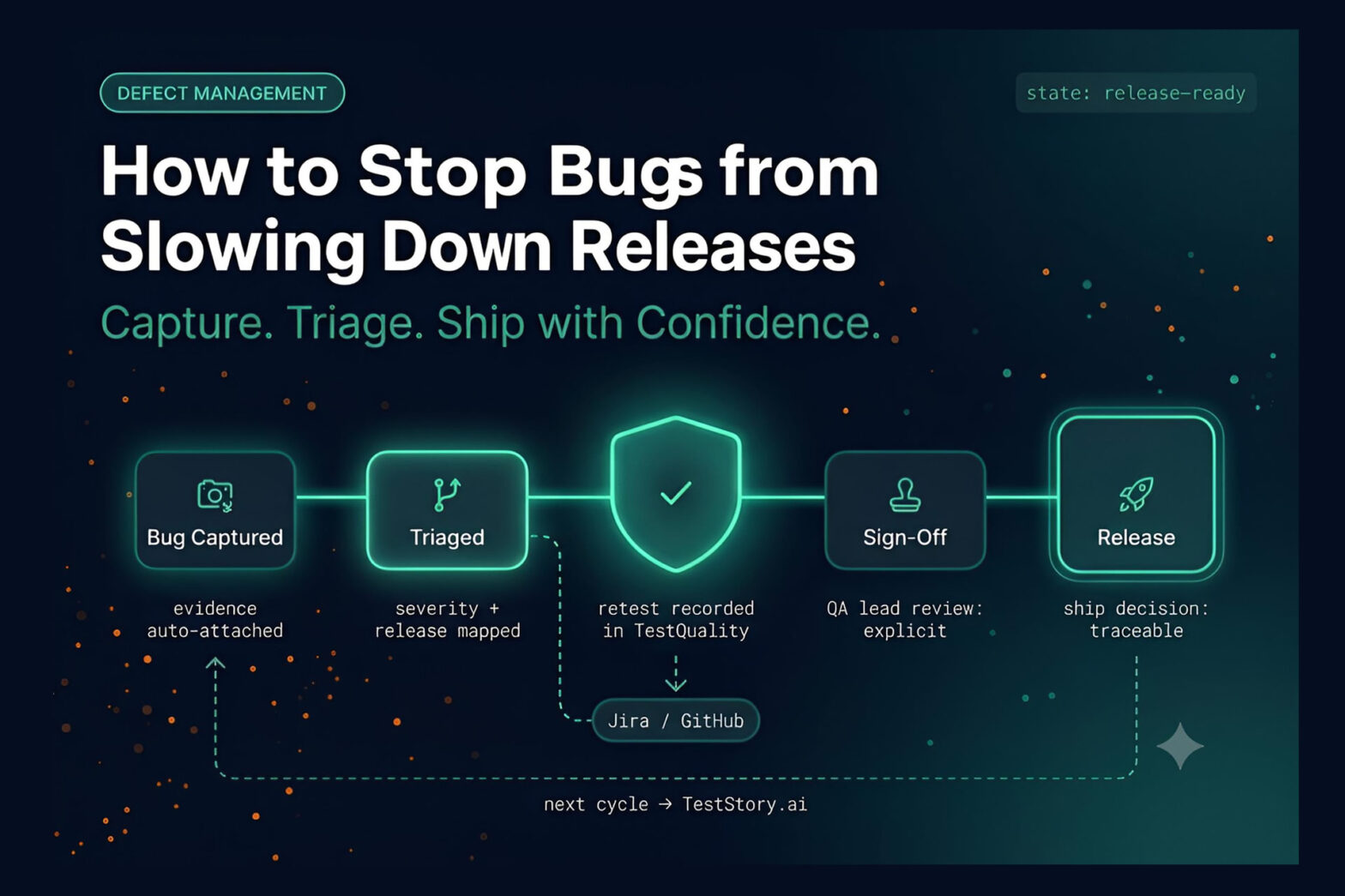
Defect management is the end-to-end process of capturing, triaging, routing, retesting, and closing software defects before they block a release. Most teams discover bugs fast enough — the delay comes in everything that happens after discovery: chasing reproduction details, clarifying which environment is affected, and confirming whether a fix actually holds before shipment. A fragmented… Continue reading How to Stop Bugs from Slowing Down Software Releases
Agentic Exploratory Testing: Validating the Unexpected

Autonomous exploratory testing is an unscripted software validation approach in which AI agents dynamically interact with an application using reasoning rather than predefined scripts. Instead of following documented paths, these systems leverage heuristic-based exploration and context-awareness to navigate complex interfaces, map undocumented application states, and surface the “unknown unknowns” that structured testing consistently misses. Unlike… Continue reading Agentic Exploratory Testing: Validating the Unexpected
Exploratory Testing: Benefits, Challenges and, Best Practices

Exploratory testing, a dynamic and versatile approach to software testing, has gained significant traction in recent years. In previous blog posts we explained what’s Exploratory Testing and why it’s so helpful. Also, we have discussed How to develop a Structured Exploratory testing strategy and we introduced why it is the real asset to exceptional functionality and superb UX… Continue reading Exploratory Testing: Benefits, Challenges and, Best Practices
Should our Exploratory Testing Be Automated?

Exploratory tests are always different tests that are created and conducted at the same time. According to this concept, their automation may appear unnatural. Nonetheless, the deployment of automation based on predetermined and unpredictable circumstances may be of interest: the detection of business flaws. Exploratory testing emphasizes discovery, research, and learning, whereas automation testing focuses on… Continue reading Should our Exploratory Testing Be Automated?
What Is Exploratory Testing and Why Is It So Helpful?

We are sure you’ve heard of Exploratory Testing, and you’ve probably heard about how amazing it is. (Yes! This is the weapon of choice!) And you may believe you know all of it. You’re doing it, your team is doing it, therefore everything should be OK; according to the great book of plans, you’re all set.… Continue reading What Is Exploratory Testing and Why Is It So Helpful?
How to Develop a Structured Exploratory Testing Strategy
Structured exploratory testing is the real asset to exceptional functionality and superb UX if you want your QA to go above and beyond basic expectations. Executing functional, regression-based scripted test cases is the minimal requirement for verifying that your product functions as intended while testing online and mobile apps. Scripted functional testing, on the other hand, can only… Continue reading How to Develop a Structured Exploratory Testing Strategy
What is Ad-hoc Testing?

What is Ad Hoc Testing? Ad Hoc Testing is defined as random testing without a strategy. It is also known as Monkey Testing or Random Testing. This sort of testing does not conform to any documentation or strategy for carrying out this activity. The testing processes and situations are solely determined by the tester, and errors are… Continue reading What is Ad-hoc Testing?